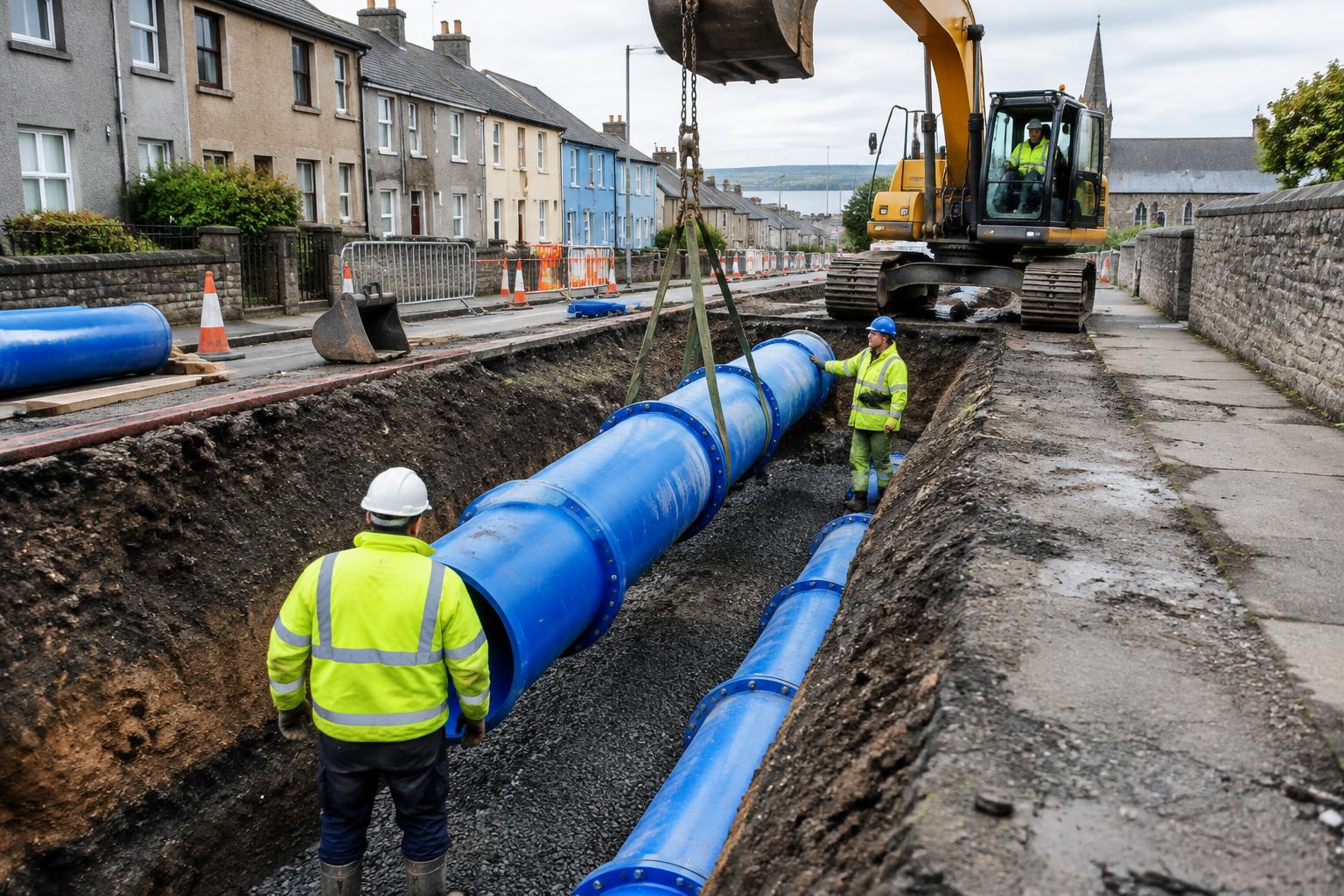
New homes can't be lived in until they're connected to water and wastewater. This September, Uisce Éireann and local councils moved projects forward in Meath, Sligo, Cork, Dublin and Tipperary that will do exactly that.
Enfield and Sligo
Construction was due to begin the week after 18 September on a major water project in Enfield, Co Meath. It will strengthen the town's water supply and add capacity for future housing.
Coffey Construction is carrying out the works in phases for Uisce Éireann, with completion expected by the end of the third quarter of 2027. Phasing keeps disruption to local roads and residents as low as possible.
In Sligo town, Uisce Éireann began a water network upgrade in September under its Accelerated Growth Programme, which targets extra water and wastewater capacity in places where housing is planned.
Ballineen and Enniskeane
Cork County Council granted permission to Uisce Éireann for a new, larger wastewater treatment plant at Derrigra, Ballineen, which also serves the neighbouring village of Enniskeane.
Local representatives welcomed the decision because it will free up land for new homes in both villages. In many rural areas, wastewater capacity is the main thing holding back new housing.
A modern treatment plant also protects local rivers, which matters in west Cork, where waterways support fishing, tourism and wildlife.
Tallaght and Grangemockler
In Cookstown, Tallaght, a €5 million wastewater investment has been completed, increasing network capacity under Uisce Éireann's Growth and Development Programme. That supports continued housing and business growth in west Dublin.
In Grangemockler, Co Tipperary, work is under way on a nature-based wastewater treatment plant, along with a new pumping station and rising main.
Nature-based systems use planted wetlands to clean wastewater. They're a good fit for smaller villages, with lower running costs and a gentler footprint on the landscape.
Why This Matters for Housing
Council planners can zone land for homes, but nobody can move in without a water supply and wastewater treatment. Each of these projects removes a bottleneck that would otherwise hold back new housing.
Uisce Éireann's capacity registers show where connections are available and where upgrades are needed. Projects like these move towns from 'constrained' to 'available' and open them up for development.
Much of this work goes on underground and out of sight, but it is what lets housing schemes go from planning permission to people actually living in them.
Following Capacity From Works to Connections
Each project addresses a different part of the water system. Enfield and Sligo involve network capacity; Ballineen and Enniskeane depend on wastewater treatment; Tallaght has completed a network investment; and Grangemockler is using a nature-based treatment approach. They should not be presented as one national project or as guaranteeing a fixed number of homes. Their common value is that they remove or reduce infrastructure constraints in places where councils and communities want development to proceed.
Capacity has to be translated into actual connections. A developer still needs planning permission, a connection agreement and a programme for building the homes or premises concerned. Councils also have to ensure that roads, drainage, schools and other services can support growth. Water investment is therefore necessary but not sufficient on its own. The clearest sign of success will be housing and local projects progressing after the utility work, without creating new pressure elsewhere in the network.
Construction management will matter in Enfield and the other live work areas. Phased works can maintain access and reduce disruption, but residents and businesses need timely notices about traffic, temporary supply changes and reinstatement. In Ballineen, environmental performance will be central because treatment quality affects the receiving waters as well as development capacity. These are unglamorous details, yet they determine whether infrastructure earns public confidence. Completion dates, commissioning and updated capacity information are the next milestones to watch.
Uisce Éireann's published figures show the scale behind the individual works. Enfield is a €20 million project involving about eight kilometres of new watermain and a secondary chlorination unit, with completion expected by the end of the third quarter of 2027. Sligo's Western Distributor Road work adds more than 800 metres of mains. The completed €5 million Cookstown upgrade includes 650 metres of sewer pipeline and is designed to support up to 1,600 future homes. These are measurable capacity investments rather than general commitments to future upgrades.
Council infrastructure projects move through a series of public stages: options and surveys, preliminary design, environmental assessment, planning or statutory approval, detailed design, land agreements, procurement and construction. Funding must often be confirmed again as a project passes from one stage to the next. That can make progress appear slow, but each completed stage reduces uncertainty and brings a project closer to work on the ground. Clear timelines are valuable, provided they remain tied to the approvals and procurement steps that still have to be completed.
The local benefit is usually wider than the piece of infrastructure itself. A road can unlock zoned land and make a town centre safer; a water upgrade can allow approved housing to connect; and a walking route can link homes with schools, shops and public transport. Councils therefore have to judge projects as part of a place rather than as isolated engineering works. The strongest schemes solve an immediate capacity or safety problem while supporting housing, local business and healthier travel over the longer term.
Delivery also depends on coordination that residents rarely see. Local authorities work with national agencies, utility companies, landowners, consultants and contractors, while maintaining access for homes and businesses during construction. Public consultation and environmental assessment are not side issues: they identify problems early and help shape a design that can be built and maintained. The next meaningful update is not another statement of ambition, but evidence that the project has advanced to its following formal stage.
The Bottom Line
From Enfield to Ballineen, September's water projects are laying the pipes that new housing depends on. It rarely makes headlines, but it is what makes new homes possible.