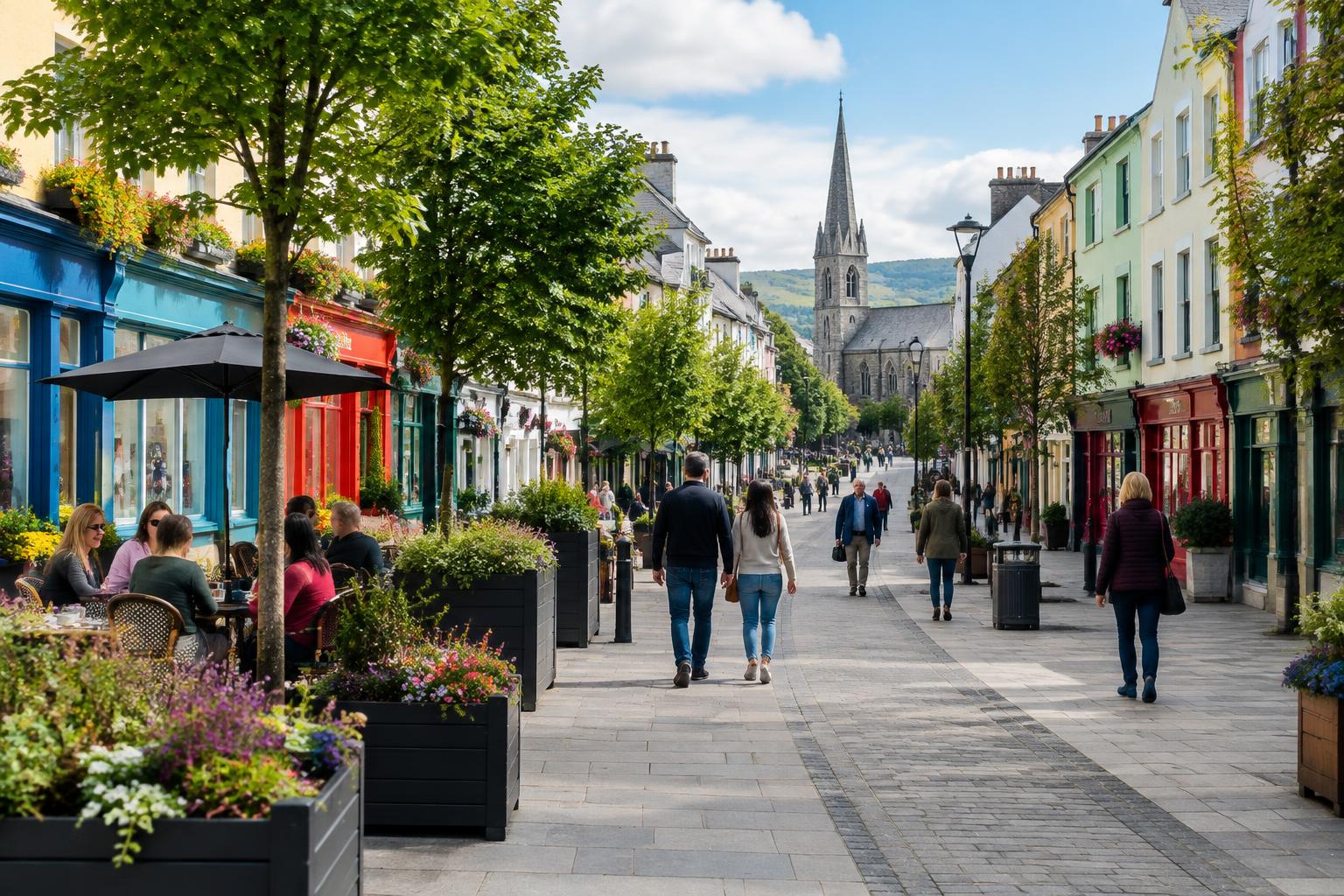
Minister James Browne has announced €409 million for almost 120 projects under the new Towns and Cities Regeneration Investment Fund, covering every local authority area in the State.
What Was Announced
On 14 September 2026 the Minister for Housing, Local Government and Heritage published the list of projects included in the new Towns and Cities Regeneration Investment Fund.
Up to €409 million is available across almost 120 projects, as long as councils meet the targets set out in their applications.
Every local authority area in the State is covered, from the largest cities to smaller county towns.
What the Money Pays For
The Minister said the funding will focus on redeveloping underused sites and improving civic infrastructure.
In practice that covers public squares, pedestrianised streets, civic buildings, libraries and community spaces: the places that make a town centre somewhere people want to spend time.
Many projects also bring vacant or derelict buildings back into use, often with new homes above ground-floor shops.
Replacing the URDF
The fund was announced in March 2026 to replace the Urban Regeneration and Development Fund (URDF).
It keeps much of the URDF's approach and applies many of the criteria the Government set in 2018, so councils are working with a familiar system.
Targets Built In
Because the money depends on councils meeting their targets, the fund rewards getting projects built, not just planning them.
Each council now has to take the next steps: detailed design, planning where needed, and procurement.
That puts a clear focus on delivery, and residents will be able to see progress on the ground in the years ahead.
How to Tell Whether the Fund Is Delivering
The €409 million figure is a national ceiling across almost 120 projects, not money that turns into completed work immediately. Each council must meet the conditions and milestones attached to its allocation. Projects at an early design stage will take longer than those with planning and tender documents ready. Publishing a project-by-project timetable would allow residents to see which schemes can move quickly, which require statutory approval and where a delay in one stage affects the release of later funding.
Regeneration also has to be judged by use, not appearance alone. New paving and street furniture can improve a place, but lasting town-centre recovery depends on occupied buildings, reasons to visit and safe access for people of different ages and abilities. Bringing vacant upper floors or civic properties back into use can add homes and activity throughout the day. Councils should connect public-realm work with vacancy programmes, transport, local enterprise and community services rather than delivering isolated cosmetic projects.
The target-based structure creates an incentive to advance work, while also requiring honest reporting when costs or designs change. Construction inflation, archaeological findings and utility diversions can alter a programme after an allocation is announced. Good governance means explaining those changes, updating the scope where necessary and protecting the central public benefit. The fund's success will be visible over several years through contracts, completed phases and active town-centre spaces—not through the launch total on its own.
The Government's published list gives a more precise national total of 119 projects, with proposed support ranging from €150,000 to €9 million. Category 1B covers shorter-term projects intended to reach site by September 2027, while Category 1A supports schemes planned for later years of the National Development Plan. More than 30 selected projects are in areas identified as disadvantaged. That structure gives the fund both an immediate delivery track and a longer design pipeline, and it provides clear dates against which councils can report progress.
Category 1B's requirement to be on site by September 2027 gives councils and the public an early checkpoint. A project that is not moving through design, permission and tendering will have to explain how that deadline remains achievable. Category 1A serves a different purpose by funding preparation for later delivery, so it should not be judged by the same construction timetable. Separating those categories in public reporting will prevent early design allocations from being mistaken for shovel-ready schemes and will show whether the fund is maintaining both immediate work and a future pipeline.
Local government finance is ultimately about turning annual decisions into visible services. Councillors adopt budgets, set the Local Property Tax adjustment and approve capital programmes, while executive teams manage spending and report on delivery. Some income is restricted to a defined purpose and some supports day-to-day local priorities. Understanding that distinction matters: a large funding announcement may support a multi-year building programme, while a comparatively modest recurring sum can keep libraries, roads, parks and community grants operating every week.
The most useful way to assess a funding decision is to follow it beyond the headline total. Councils still have to complete designs, obtain permissions, procure contractors and meet the conditions attached to national allocations. Published council meetings, budget documents and tender notices provide the milestones. That process protects public money and gives residents a way to see whether a project is moving. It also means an allocation should be described as funding available for delivery, not as a completed building or public space before work has happened.
Local choices remain central even when national government provides the main fund. Elected members decide how local income is balanced across competing needs, and councils shape national programmes into projects suited to their own towns. Public consultation gives residents an opportunity to challenge that balance before decisions are final. The result is rarely one dramatic change; it is a series of choices about housing, streets, amenities and services that together determine what a council can deliver in the following year and beyond.
The Bottom Line
€409 million across nearly 120 projects in every council area is a major investment in town and city centres, and a strong reason for councils to deliver.