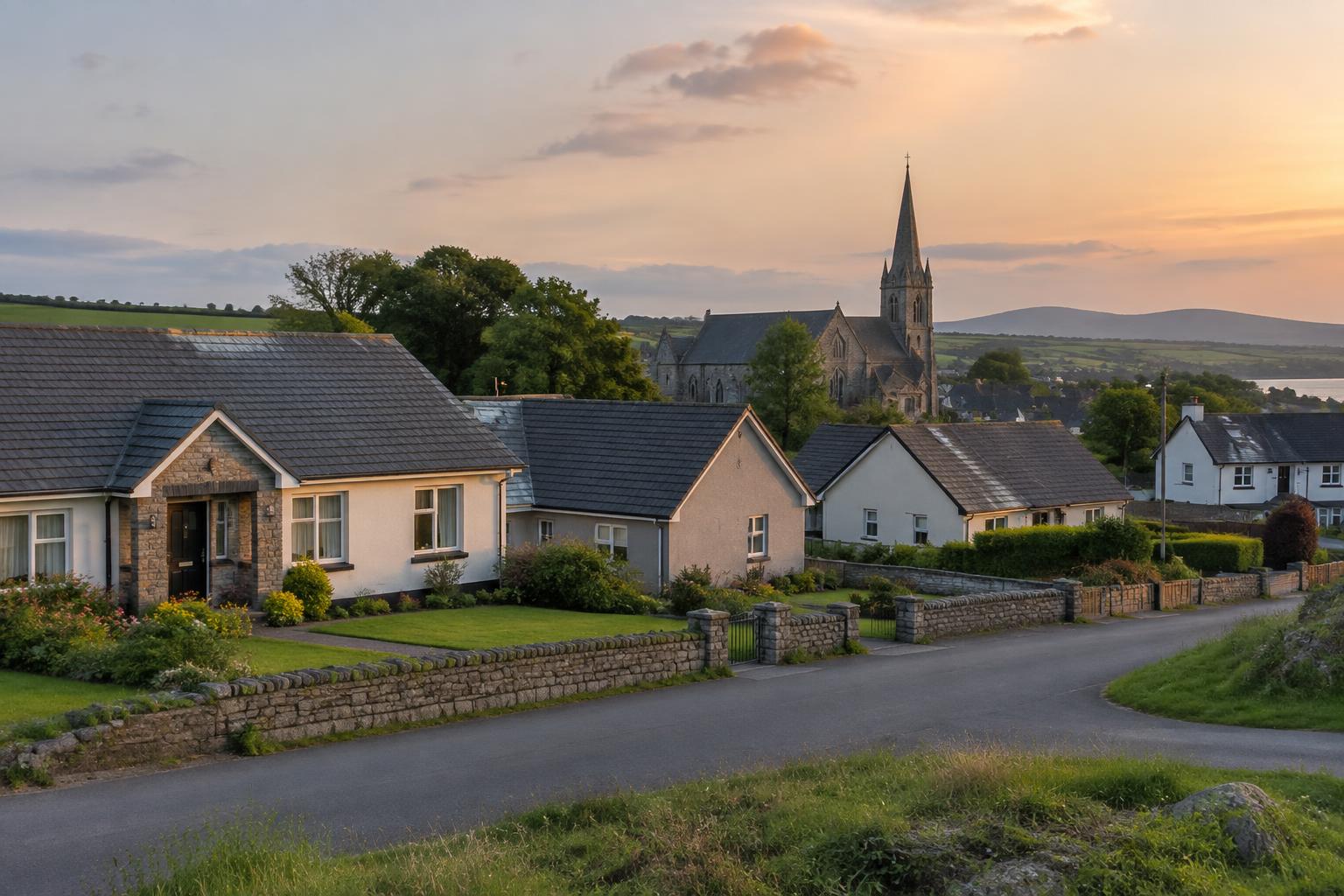
Big-city schemes get the headlines, but August and September also brought a steady run of new social homes in villages and towns, from 58 homes in Louth Village to 20 in Sligo town centre and 10 in Kilfinane.
Louth Village: 58 Homes Nearly Ready
On 2 September Louth County Council visited An Mullach in Louth Village to see progress on 58 new homes.
Construction started in December 2024, and the scheme is due to be handed over to the council in October 2026. The first homes are being advertised through the council's Choice Based Lettings system from mid-September.
With Choice Based Lettings, people on the housing list can see available homes and say which ones they're interested in, instead of simply being offered a property. Families are expected to move into An Mullach before the end of the year.
Kildare: Monasterevin and Carbury
On 27 August Kildare County Council signed a contract for 13 new social homes in Monasterevin, due for completion in 2027.
On 24 September it signed another contract in Carbury. That project will turn the old Dispensary building into a home and add four new terraced social homes beside it, also due in 2027.
Carbury shows how councils are bringing old buildings back into use. A former public building is getting a second life as a home, and its surroundings are being finished to a high standard.
Sligo, Mayo, Limerick and Cork
In Sligo town centre, work began in August on 20 social homes at Pirn Mill Road. Finna Construction is building them for Sligo County Council, with completion expected in the third quarter of 2027.
In Mayo, work is progressing well on 25 social homes for Mayo County Council, including two fully accessible four-bedroom homes and a community dwelling. Completion is due in the second half of 2027.
Limerick City and County Council officially opened Radharc Cillín in Kilfinane in August: 10 homes funded through the Social Housing Investment Programme, costing about €4 million. In north Cork, work began on seven homes at Cearnóg Chluain Each, Knocknagree.
Why Smaller Schemes Count
A dozen new homes in a village can help keep a national school open, give a GAA club new members and support the local shop. Smaller schemes let people stay in the community they already belong to, close to family and friends, instead of moving to the nearest big town.
They are often built on council-owned sites or in old buildings like the Carbury Dispensary, bringing disused property back into use and keeping land costs down.
Accessible homes, like the four-bedroom units in Mayo, also mean people with disabilities and their families can find suitable housing locally.
Why a Distributed Programme Matters
The projects differ in size and delivery stage, so their figures should not be combined as if all homes were ready at once. Louth Village is approaching handover and allocation; the Kildare schemes have signed contracts for later completion; Sligo and Mayo are in construction; and Kilfinane has reached opening. That range is useful because a healthy housing programme needs projects at every stage. If councils only announce new schemes without finishing older ones, the pipeline stalls. If they only complete existing work without adding future contracts, supply falls away later.
Smaller towns require careful matching between housing type and local need. A large standard estate may not suit a village, while a modest scheme on a well-located site can support the school, shop and community organisations without overwhelming existing services. Reusing the former dispensary at Carbury also retains a piece of local fabric while adding homes around it. These projects show that rural delivery can combine new construction, adaptive reuse and accessible design rather than relying on one model everywhere.
Allocation and long-term management are the final tests. Choice Based Lettings gives qualified households visibility of available homes, but the council must still match property size and household need under its allocation scheme. Approved housing bodies and councils then maintain the homes and support tenancies. For communities, the benefit arrives when lights come on and families settle in, not at a contract signing. Tracking handover dates through 2027 will show whether the current spread of activity becomes a steady supply of occupied homes.
There is useful design detail behind several of the smaller totals. An Mullach is being delivered through Louth's Accelerated Delivery Programme and includes a supported-living home managed by St John of God. The 20-home Pirn Mill Road scheme in Sligo uses the winning design from a national Town Centre Living architectural competition, combining terraces with apartments on a central site. At Kilfinane, the ten completed homes include eight social tenancies and two incremental-purchase homes. These are different responses to local need, not identical estates reproduced from county to county.
Local-authority housing delivery is a chain rather than a single announcement. Land has to be identified, funding approved, designs completed, planning secured, contractors appointed and the finished homes allocated or sold under published rules. A scheme can therefore appear quiet for long periods even while technical work continues behind the scenes. The useful test is whether it has crossed a measurable delivery point: a signed contract, work on site, applications opening or keys being handed over. That is why the stage reached in this project matters more than a broad promise about future supply.
The tenure is important too. Social housing gives households on a council list a secure home linked to need. Starter Homes help eligible purchasers bridge the gap between their mortgage capacity and the market price, with the council retaining an equity share. Cost rental serves households who may not qualify for social housing but cannot comfortably meet private rents. Delivering those options together allows councils and their partners to serve different incomes without treating every housing problem as if it had the same answer.
For residents, quality is measured over decades. Energy performance affects monthly bills; accessible layouts determine whether somebody can remain at home as their needs change; and proximity to schools, shops, healthcare and public transport shapes daily life. The number of homes is the headline, but location, tenure and long-term management decide whether a development becomes a settled neighbourhood. Those are the practical details to watch as each scheme moves from an official announcement to occupied homes.
The Bottom Line
Across Louth, Kildare, Sligo, Mayo, Limerick and Cork, councils spent late summer signing contracts, starting work and handing over keys. New homes are being built in small towns and villages as well as the cities.