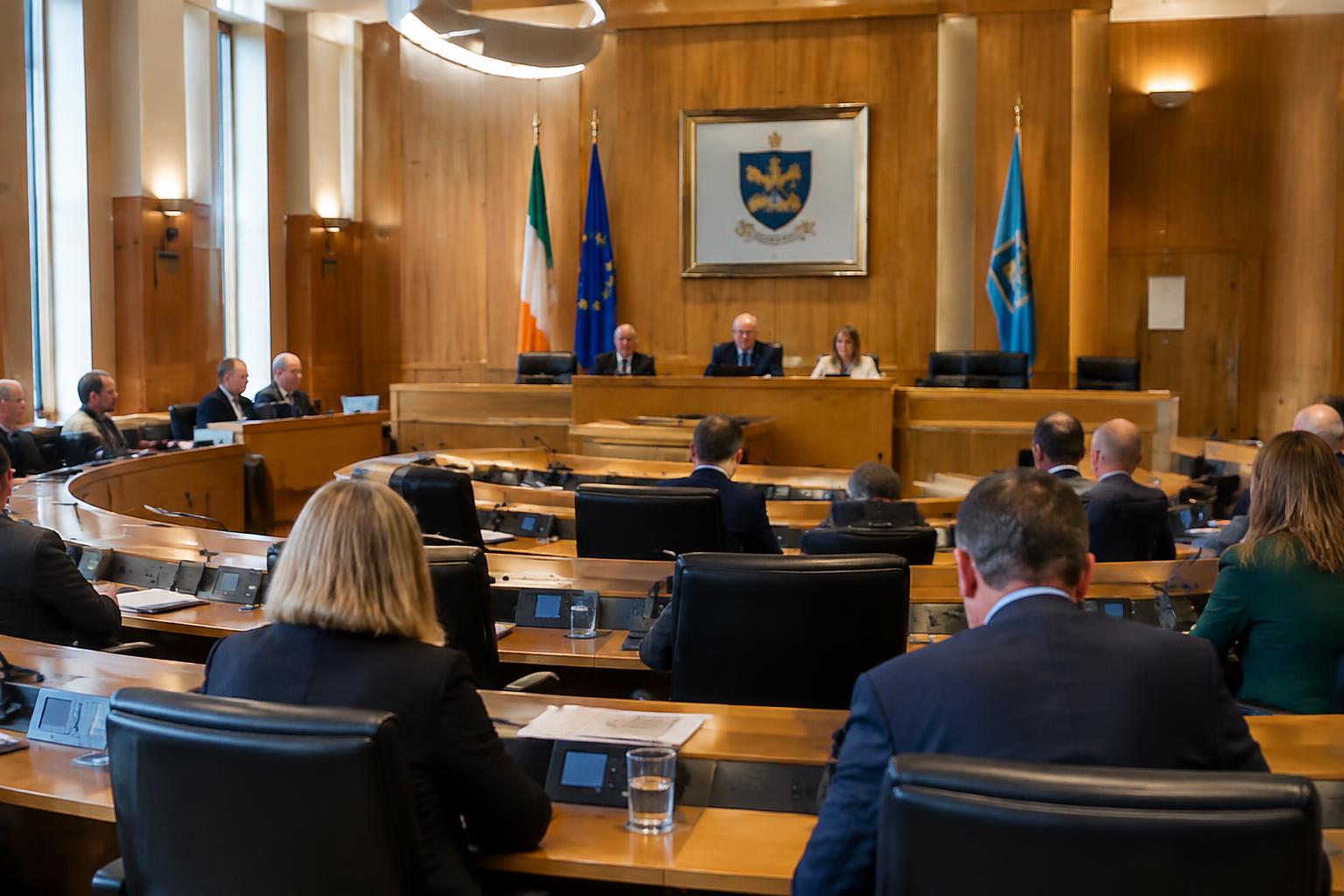
September and October are when councillors set next year's Local Property Tax rate. Here is how Meath, Cavan, Longford, Dún Laoghaire-Rathdown and Fingal are approaching 2027.
Meath Holds the Rate
At its meeting on 7 September, Meath County Council reached broad agreement across parties to keep the current LPT rate for 2027.
Councillors pointed to cost-of-living pressure on families as the main reason for holding the rate steady.
Cavan Invests Locally
Cavan County Council voted for an increase that will see 87% of properties pay an extra 50 cent a week.
The additional money stays in the county, supporting local services such as roads, libraries, parks and community grants.
It's a clear example of councillors choosing a modest local contribution for visible local benefit.
Longford, Dún Laoghaire-Rathdown and Fingal
Longford's Director of Finance said no changes are proposed, with the final decision due at the council's November budget meeting.
Dún Laoghaire-Rathdown held a public consultation from 31 July to 4 September ahead of a vote on 12 October.
Fingal will decide its 2027 Local Adjustment Factor in October.
Local Democracy at Work
Each council sets its own rate after a public consultation, so residents can have their say on the balance between local tax and local services.
The range of decisions, from holding the rate to modest increases, reflects different local needs and priorities.
That's the system working as intended: decisions made by locally elected councillors, answerable to the people they represent.
How Residents Can Read the Decisions
A council's Local Adjustment Factor changes the basic LPT charge within the range allowed by law. The effect on an individual household depends on the property's valuation band, which is why councils often describe both the percentage decision and an example weekly or annual amount. Residents should check the adopted resolution and Revenue information for their own band rather than applying a headline example to every property. The decision concerns the local adjustment only; the national valuation and collection system remains separate.
The consultation gives the public a formal opportunity to comment before councillors vote, but the final choice belongs to the elected council. Members weigh household costs against the services or projects that additional income could support. Holding the rate can provide certainty for taxpayers, while an increase can retain more revenue for local priorities. Neither choice should be assessed without the accompanying budget information, because the question is what level of service and investment the council can sustain with the income available.
Timing also matters. Meath and Cavan have reached decisions described in this report, while the other named councils are at different points in consultation or budget preparation. A proposal from an official is not the same as a vote, and a consultation does not predict its outcome. Updates should record the final resolution of each council when adopted. That approach lets readers compare decisions accurately and see how the resulting income is reflected in the 2027 budget rather than turning an evolving process into a premature national league table.
The council votes show how different the local choices can be. In Meath, the executive recommendation for a 15% increase was rejected by councillors, leaving the rate unchanged. Cavan approved a 10% increase on a 9–6 vote, with the additional income earmarked for road repair and maintenance; the council said 87% of properties would pay about 50 cent extra a week. Longford's finance director, John McKeon, said no change was proposed ahead of the November budget decision. These distinctions are important: a recommendation, consultation and adopted rate are three different stages.
Dún Laoghaire-Rathdown's consultation followed several years in which the council applied the maximum 15% reduction, while Fingal entered consultation with a 5% reduction in place for the current period. Those starting points mean an identical vote to apply the basic rate could have a different household and budget effect in each county. The published consultation documents and final council resolutions provide the correct comparison. Once votes are complete, the next test is the adopted budget: residents should be able to see how the chosen rate connects with service levels and planned local investment.
Local government finance is ultimately about turning annual decisions into visible services. Councillors adopt budgets, set the Local Property Tax adjustment and approve capital programmes, while executive teams manage spending and report on delivery. Some income is restricted to a defined purpose and some supports day-to-day local priorities. Understanding that distinction matters: a large funding announcement may support a multi-year building programme, while a comparatively modest recurring sum can keep libraries, roads, parks and community grants operating every week.
The most useful way to assess a funding decision is to follow it beyond the headline total. Councils still have to complete designs, obtain permissions, procure contractors and meet the conditions attached to national allocations. Published council meetings, budget documents and tender notices provide the milestones. That process protects public money and gives residents a way to see whether a project is moving. It also means an allocation should be described as funding available for delivery, not as a completed building or public space before work has happened.
Local choices remain central even when national government provides the main fund. Elected members decide how local income is balanced across competing needs, and councils shape national programmes into projects suited to their own towns. Public consultation gives residents an opportunity to challenge that balance before decisions are final. The result is rarely one dramatic change; it is a series of choices about housing, streets, amenities and services that together determine what a council can deliver in the following year and beyond.
The Bottom Line
Councils are making their own decisions on LPT for 2027, some holding the rate and some investing more locally, and residents can have their say through each council's consultation.