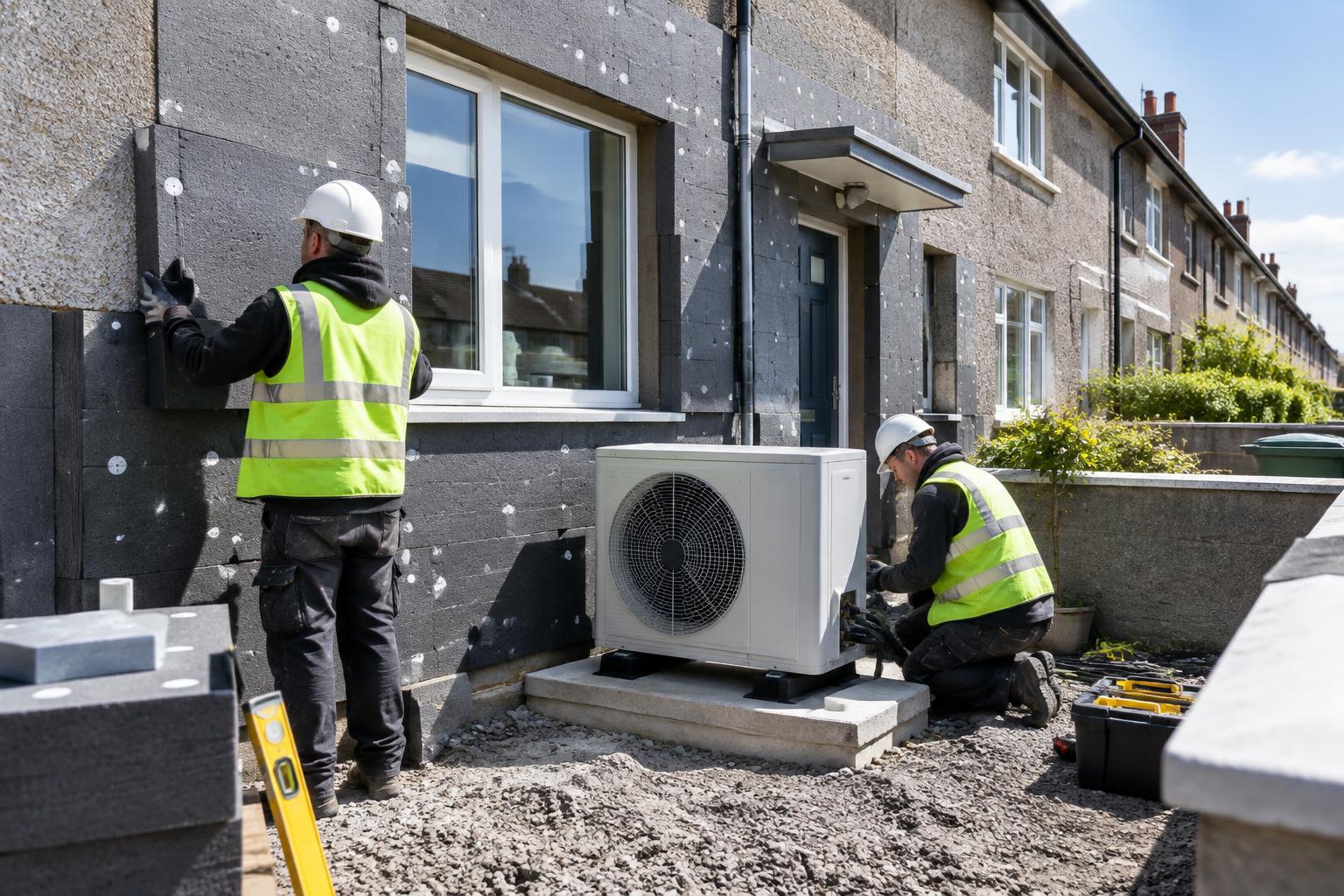
Galway County Council has gone to tender for a design team for its second SEAI Local Authority Energy Pathfinder Programme, as funding for upgrading council homes rises to €140 million in 2026.
The Galway Tender
On 11 September 2026 Galway County Council published a tender for a design team, led by an architect and a building services engineer, for SEAI Local Authority Energy Pathfinder Programme 2. The tender closes on 9 October.
The Pathfinder programme funds councils to upgrade their own public buildings, such as offices, libraries, fire stations and leisure centres, so they use less energy and produce fewer emissions.
A second round in Galway means the council is building on work from the first, taking what it learned and applying it to more buildings.
Council Homes Getting Warmer
The National Residential Retrofit Plan 2026 sets aside €140 million for councils' energy upgrades of their homes this year, aiming for about 3,500 upgrades.
Last year €90 million was spent under the same programme, supporting 2,673 home retrofits. This year's budget is more than 50% higher.
For tenants, a retrofit usually means new insulation, windows and a heat pump. The result is a warmer home, lower heating bills and better health, particularly for older people and young children.
Home Solar Keeps Growing
A Dáil reply on 7 September said more than 33,000 home solar installations were supported in 2025.
In 2026, more than 31,000 applications had been received and over 18,000 installations completed by the end of July.
Those numbers show strong public interest in generating power at home, alongside the councils' own building programmes.
Why Councils Are Well Placed
Councils own thousands of homes and hundreds of public buildings. Upgrading them in large numbers brings costs down and gives contractors a steady pipeline of work.
That steady work helps build a local workforce of trained installers, which benefits private homeowners too.
It also shows residents what a retrofit looks like in practice, making them more likely to upgrade their own homes.
Turning Programmes Into Measured Savings
The Galway design-team tender is the beginning of a technical process. The appointed specialists will need to survey buildings, establish how energy is currently used and choose measures suited to each property. An office, library, fire station and leisure centre have different operating hours and heating demands, so a standard package would not deliver the same result everywhere. Good design starts with the building fabric and controls before deciding how new heating or renewable systems should be sized.
Measurement after the work is just as important as design beforehand. Councils can compare energy use, bills and comfort against the baseline, identify systems that are not performing as expected and apply lessons to the next group of buildings. Publishing those outcomes would make Pathfinder useful beyond the individual properties. Other councils could see which combinations of insulation, controls and low-carbon heat provide dependable savings in Irish public buildings instead of repeating the same trial independently.
For council tenants, the €140 million residential programme has a different but closely related test: homes must become warmer without systems becoming harder or more expensive to operate. Resident consultation, clear instructions and follow-up support should accompany physical works. The target of about 3,500 upgrades provides a national measure, while completion figures and tenant experience will show the local result. Galway's tender and the larger housing budget together demonstrate scale, but verified energy savings and improved comfort are the outcomes that matter.
The design-team contract was advertised with an estimated value of €500,000, underlining that the Pathfinder stage is a professional design and assessment programme before major physical work. Nationally, the 2026 Energy Efficiency Retrofit Programme increased the average grant available per social home from €34,000 to €38,000. That additional support is intended to help councils complete deeper upgrades as construction costs and technical requirements rise. Comparing completed homes with the target of about 3,500 will show whether the larger budget translates into a larger and more effective programme.
Local authorities influence the energy transition in several distinct roles. They retrofit their own housing and public buildings, assess planning applications for new generation, provide streets and sites for shared heat networks, and prepare county climate plans. Those decisions connect national targets with particular buildings and communities. The practical question is not simply how much renewable capacity Ireland wants, but where projects can be delivered responsibly, how local impacts are managed and whether households see warmer homes or more dependable energy as a result.
Every energy project also has a delivery sequence. Planning permission, where required, is only one step; grid capacity, finance, procurement and construction must follow. Retrofit programmes need surveys, designs, resident communication and suitably trained contractors. District heating needs anchor customers and pipe routes as well as a source of spare heat. Keeping those stages separate avoids presenting a proposal as a finished outcome, while still recognising genuine progress when a council awards a contract, grants permission or moves a programme into its next phase.
The strongest local projects combine lower emissions with an everyday benefit. Better insulation can reduce the amount of energy a tenant needs; solar and storage can add diverse generation to the grid; and district heating can reuse energy that would otherwise be lost. Councils are well placed to demonstrate those changes because they own substantial building portfolios and make decisions in public. Residents can then judge delivery through planning files, budgets, contracts and completed work rather than relying on distant national targets alone.
The Bottom Line
A second Pathfinder tender in Galway and €140 million for upgrading council homes show local government doing a growing share of Ireland's home energy upgrades.