Budget 2027 delivered record funding for housing, water, regeneration and fire services, plus new borrowing powers for councils. Here is what is confirmed, where the money is going, and what Ireland's 31 local authorities are planning as budget meetings arrive in November.
The Budget Behind Every Council Budget
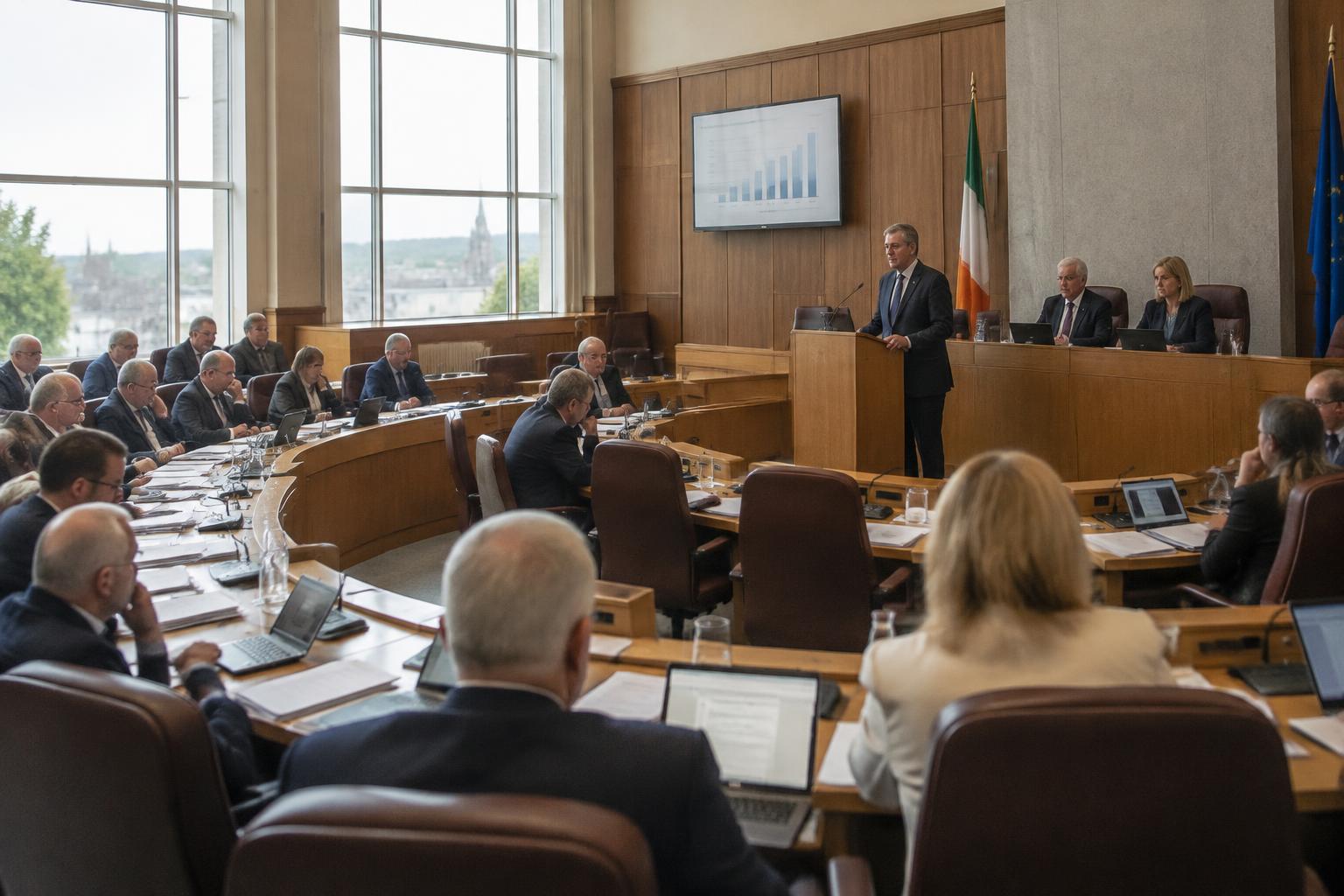
Every November, Ireland's 31 city and county councils hold their statutory annual budget meetings, where elected members vote through the spending plans that shape local services for the year ahead. This year those meetings follow a national Budget, delivered on 6 October 2026, that put record sums into the areas councils deliver every day: housing, water, regeneration, fire services and the planning system.
Budget 2027 set gross voted expenditure at €125.6 billion, an increase of €7.1 billion or 6 per cent on 2026. The Department of Housing, Local Government and Heritage — the single largest channel of funding into local government — received a record allocation of €11.92 billion, with current spending up 10.9 per cent. Councils are now translating those national figures into local plans, and draft budgets are already being published around the country ahead of meetings through November, including Offaly on 16 November and Cavan on 20 November.
For residents and businesses, the national Budget answers the big question of how much money is available. The council budget answers the local one: what that money will actually do on their street, in their town and across their county.
The Definites: What Is Already Confirmed for 2027
Several figures are locked in. The Local Government programme itself receives €894 million in 2027 — €825 million in current spending and €69 million in capital. Within that, €755 million goes to the Local Government Fund, which covers Exchequer contributions towards public sector pay costs across all 31 local authorities and pays Local Property Tax equalisation to councils whose LPT yield falls below set baselines. That equalisation is especially important for smaller and rural councils, as it means a county's service levels are not tied solely to local property values.
The fire service capital programme gets €58.7 million to continue building 24 new fire stations, renovate or upgrade 15 existing facilities, renew the fleet and invest in frontline and specialist equipment under the 2026–2030 programme. A further €800,000 supports measures to encourage gender balance and greater diversity in local government.
The most significant structural change is new financial freedom. Tánaiste and Minister for Finance Simon Harris told the Dáil that from 2027 local authorities with the means will be allowed to spend their own resources, or borrow, an additional €200 million per year to invest in capital projects consistent with Government priorities. Minister of State for Local Government and Planning John Cummins described it as giving councils "both greater resources and greater financial flexibility," and confirmed the funding will also support the reforms set out in the Local Democracy Taskforce implementation plan announced in July.
Where the Money Is Going: Housing, Water and Regeneration
Housing remains the largest single area of investment, and councils are the main delivery arm. Total Exchequer funding for housing in 2027 is €7.75 billion — €5.6 billion capital and €2.2 billion current — rising to €9.1 billion once Land Development Agency investment and Housing Finance Agency lending are included. Almost €3 billion in capital supports the delivery of 12,000 new social homes, much of it built or commissioned by local authorities and approved housing bodies.
More than €1 billion goes to 15,000 Starter Home supports, including the First Home Scheme, Affordable Purchase and Cost Rental, while €947 million under the Social Housing Current Expenditure Programme supports the ongoing costs of 48,000 existing and new social homes. Homeless services receive €593 million, helping councils continue to provide emergency accommodation, and over €750 million covers specific housing needs including adaptation grants, retrofitting of social homes, defects remediation and State-owned temporary accommodation. Housing adaptation grants for older people and people with disabilities — administered by councils — account for €169 million of that.
Infrastructure that unlocks new homes gets €586 million, including almost €350 million for the Towns and Cities Regeneration Investment Fund and €225 million overseen by the Housing Activation Office, including the Housing Infrastructure Investment Fund. Uisce Éireann receives €2.35 billion for water infrastructure, which directly determines how quickly zoned land in council areas can be connected and built on. The planning system receives €119 million, including additional capacity for An Coimisiún Pleanála.
Households will also feel national measures that sit alongside council housing work. The Help to Buy cap rises to €35,000, making it easier for first-time buyers to pull together a deposit, including for council-backed affordable homes. The Rent Tax Credit increases to €1,150 for a single person and €2,300 for a couple, and the Residential Tenancies Board receives an extra €3.1 million — a 13.1 per cent increase — to strengthen protections for renters. Together with council-led supply, these measures are designed to make the path from renting to owning more achievable over the next few years.
Community, Heritage and Grant Schemes Councils Run
Beyond housing, many schemes that councils open, assess and pay are growing. The Built Heritage Investment Scheme, Historic Structures Fund and Community Monuments Fund share €30 million, supporting around 700, 40 and 120 projects respectively. The 2027 rounds are already open, with Cork County Council listing closing dates of 30 October for the Built Heritage Investment Scheme and 27 November for the Historic Structures Fund.
Rural and community funding also rises: LEADER increases by €11 million, the Community Services Programme by €5 million and the Town and Village Renewal Scheme by €2 million, with €2 million in new current funding for the Local Enhancement Programme. SEAI residential and community energy upgrade schemes receive a record capital allocation of €654.5 million, and the Arts Council receives record current funding of over €142.5 million — both of which support projects councils deliver locally.
National parks, nature reserves and biodiversity receive €206 million in core funding, supporting conservation and public access improvements that often sit alongside council greenways, amenity and tourism plans.
What Councils Are Planning Locally
Draft budgets published so far show councils combining national funding with local decisions on commercial rates and Local Property Tax. Limerick City and County Council's draft 2027 figures show commercial rates income rising from €70.45 million to €73.27 million and grants and subsidies increasing from €626.6 million to €634.1 million, with LPT income held at €22.69 million.
Galway City Council's proposals put the focus on the city centre and local business. They include a new Vacant Property Scheme waiving 100 per cent of rates in year one, 50 per cent in year two and 25 per cent in year three for businesses that reopen premises vacant for more than a year, alongside a new incentive scheme for tourism, hospitality and retail, and increased support for festivals, litter management and shopfront enhancement. Chief Executive Leonard Cleary said locally generated income is what allows the council to invest in street cleaning, public infrastructure, the night-time economy, parks and amenities, with any LPT adjustment ringfenced for footpath repair.
Councils had until 15 October to set their Local Adjustment Factor for LPT, which can now range up to 25 per cent from 2027. Several, including Fingal, Louth and Dún Laoghaire-Rathdown, ran public consultations first, giving residents a direct say on how local services are funded. Departmental papers also signal a moderation in the growth of public service staffing, so councils are expected to lean further on digital tools, shared services and reform to make every euro and every staff hour go further.
The Bottom Line
Council budgets for 2027 are being built on record national investment: €11.92 billion for the Department of Housing, Local Government and Heritage, €894 million for the Local Government programme, €755 million for the Local Government Fund, almost €3 billion for 12,000 social homes and €58.7 million for new and upgraded fire stations. The new €200 million annual borrowing and spending envelope gives councils with the means more freedom to invest in their own priorities. The definites are clear; the local detail arrives at budget meetings through November. Residents and businesses can read their council's draft budget online before the meeting and contact their local councillors to have their say.