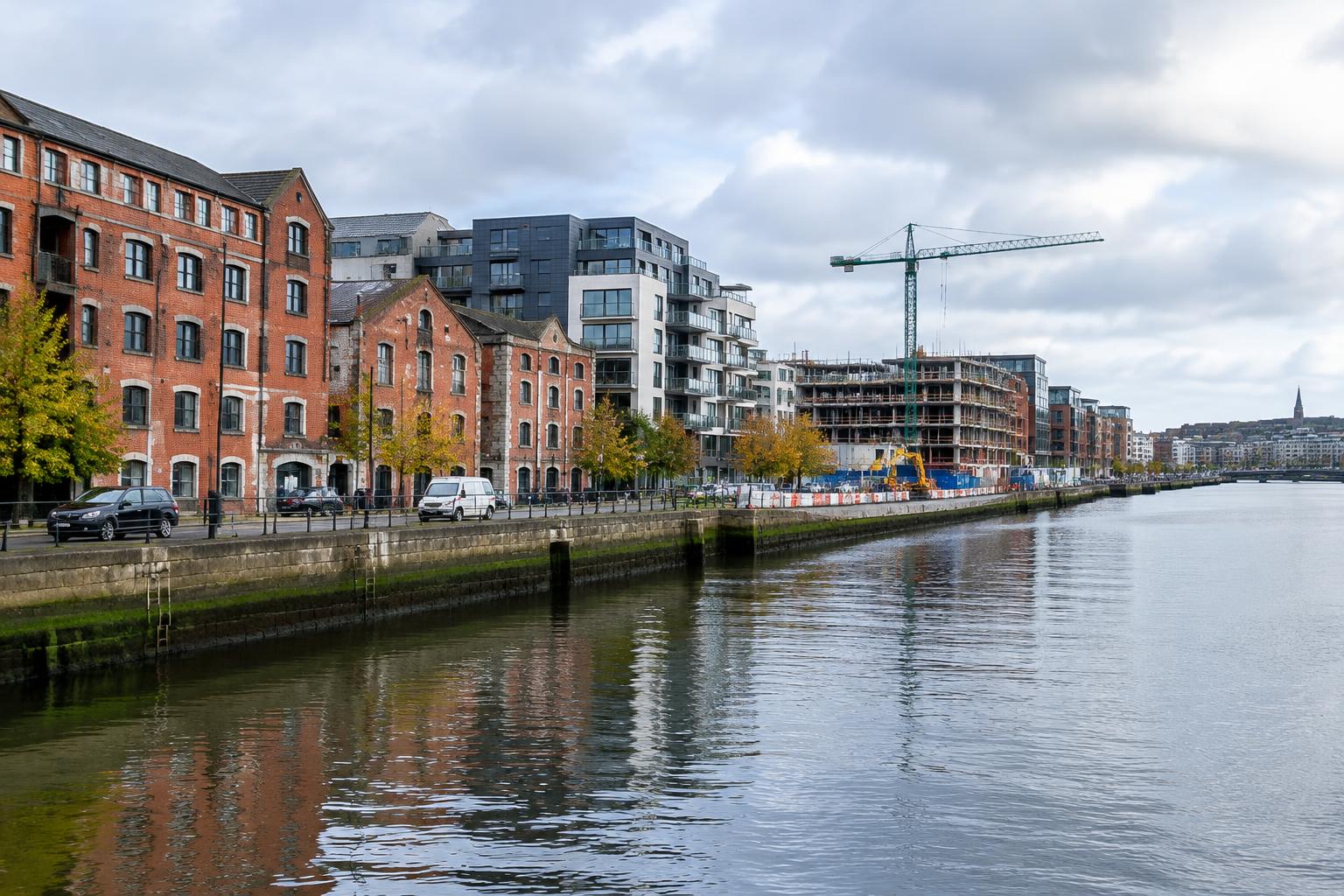
Valerie O'Sullivan has set out clear priorities after taking over as Cork City Council's Chief Executive: delivering homes, supporting regeneration and connecting a growing city. Cork's position in 2026 brings together a credible plan, meaningful funding commitments and projects moving from paper to ground. From new docklands neighbourhoods to transport and cultural investment, the council's programme offers a practical framework for long-term growth. The first housing milestones give that ambition a tangible starting point, while the wider programme sets out the infrastructure and partnerships needed to build on it. Here is how the work is taking shape.
The Docklands: Ireland's Largest Regeneration Project
Cork City Council describes Cork Docklands as Ireland's largest regeneration project. That description reflects the scale — 22,500 planned residents across the city's eastern waterfront — and the breadth of what is required to deliver it: new roads, new bridges, new public realm, new schools, wastewater upgrades, and the housing itself.
The first concrete milestone is arriving now. At Horgan's Quay on the north docks, 302 cost-rental apartments are part of a wider €160 million mixed-use development, with the residential element due for completion in the second half of 2026. On the south docks, at the former Ford distribution depot on Centre Park Road — the same site that hosts Live at the Marquee — the Land Development Agency and Glenveagh Properties are delivering 337 homes under Project Tosaigh: 260 cost-rental and 77 social apartments, with first completions expected in 2027.
Together those two sites represent approximately 639 homes arriving in the docklands within a twelve-month window — a tangible start to a long-term regeneration programme, bringing new residents and everyday activity to an important part of the city’s waterfront.
Other docklands sites form part of the next stages of regeneration. Following a setback at An Bord Pleanála affecting the Gouldings Fertiliser site, which had planning permission for 1,300 apartments, O'Sullivan believes development can still proceed under the existing 10-year permission, with a revised timeline. The Chief Executive also expects the Kennedy Quay scheme by O'Callaghan Properties and the former Sextant site by John Cleary Developments to proceed following delays. Suttons' Coals is at an earlier, pre-construction stage, with an estimated cost of up to €56.65 million for up to 300 homes. Together, these sites illustrate the wider pipeline beyond the first completions.
The €353 million government regeneration programme provides a foundation for the docklands, with O'Sullivan identifying further central government funding as necessary for full delivery. Investment will need to extend across successive phases, supporting the roads, bridges, services and public spaces that new neighbourhoods require. This phased approach reflects the scale of turning a former industrial waterfront into a functioning urban community for 22,500 people, with housing and supporting infrastructure developed together over time.
Housing Across the City
The docklands is the headline act, but Cork City Council's housing programme runs far wider. The council has committed to delivering 5,671 social and affordable homes, comprising 3,934 social homes and 1,737 affordable homes, with targets set for completion by end of 2026. Of the social homes, 2,385 are in suburban locations and 318 in the city centre, in addition to the 325 in the docklands. Six affordable schemes are under active development within the city boundary.
Cork City Council already manages over 10,600 social homes, which the corporate plan describes as placing it among the leading local authorities for social housing delivery nationally. The new programme extends that position. The Chief Executive has been direct about what meeting the affordable housing targets will require: more central government funding and more staff at the council's build, allocations, loans, and maintenance sections. Identifying those staffing and funding needs gives the programme a practical focus, linking housing ambitions to the teams and resources needed to support residents. These are targets rather than completed totals, and the council has set out the support required to advance them.
The greatest identified demand is for one-bedroom homes and specially adapted accommodation for older people and people with disabilities — a profile that reflects both demographic reality and the particular affordability pressure on single-person and smaller households in Cork's housing market.
Light Rail: The Transformative Project
No single piece of infrastructure would do more to reshape how Cork functions as a city than the proposed Cork Luas. The proposed system runs 18 kilometres from Ballincollig to Mahon Point, with 25 stops serving Bishopstown, Cork University Hospital, UCC, the city centre, Kent station, the docklands, Blackrock and Mahon. The National Transport Authority has committed €3.5 billion to the Cork Metropolitan Area Transport Strategy, within which light rail is the centrepiece investment.
O'Sullivan considers delivery by 2040 "totally feasible" and describes it as "critical to the growth of Cork City." The 2040 target provides a long-term framework for the planning, design, procurement and construction stages involved in major transport infrastructure. Progress through those stages will shape the route towards delivery, giving the city a clear horizon around which to coordinate housing, regeneration and transport investment. O'Sullivan's stated confidence places light rail firmly within Cork's plans for a connected and growing city.
The logic of light rail for Cork is straightforward. The city's population is projected to grow by 50%, to 335,000, over the next fifteen years. For a city of that size, with Cork's river channels, hills and compact city centre, mass transit offers an important way to connect people with homes, education, healthcare and employment. Light rail is intended to serve the docklands regeneration, suburban housing programmes and planned science and innovation park west of the city. Coordinating those developments with transport investment supports the shared goal of accessible neighbourhoods and well-connected communities.
South Main Street and the Cultural Quarter
Away from the big infrastructure projects, Cork City Council is also working on the cultural fabric of the city centre. O'Sullivan has identified South Main Street as a priority for cultural revival, with the Counting House building cited as a potential new library — "fantastic as a library," in her words. The proposal for a cultural quarter in this part of the city centre is at an early stage, but it reflects a broader recognition that city centres need more than offices and apartments to remain liveable.
Cork has around 40,000 students and graduates of further and higher education — a young population that needs cultural infrastructure alongside housing. UCC and MTU continue to expand. A planned science and innovation park west of the city would add to Cork's already strong clusters in ICT, cybersecurity, pharmaceuticals, biopharma, and fintech. The corporate plan explicitly supports both large multinationals and smaller indigenous enterprises through the Local Enterprise Office network.
An event centre also remains a stated priority for Cork's cultural offer. O'Sullivan has expressed her determination to secure one, while setting out the current position: the council had not received a proposal from the Marina Market owners and the tender process had not started. The project therefore remains at a preparatory stage rather than a confirmed construction programme. Alongside the South Main Street proposals, it reflects the council's focus on creating more opportunities for performances, gatherings and cultural activity as the city grows.
What the Plan Adds Up To
Cork City Council's 2024–2029 corporate plan commits over €2.5 billion of investment across housing, transport, regeneration, cultural infrastructure, and community services. That figure comes from multiple funding streams — central government, the LDA, NTA, private development, and the council's own resources — and it is a pipeline rather than a single commitment. Projects within that pipeline are at different stages, with delivery schedules and costs developing through planning, procurement and construction. Distinguishing the overall investment programme from individual approved allocations helps residents understand how each strand moves forward and how the council's partners contribute to the city's development.
What has changed in 2026 is that the first docklands homes are arriving, the Chief Executive is setting out clear priorities for the next stages of delivery, and the national funding context — the NTA's €3.5 billion transport commitment, the LDA's Project Tosaigh, the government's regeneration programme — provides a financial foundation for the next stages of Cork's growth.
The projects on the ground bring the programme into focus: homes progressing towards completion, transport investment with a long-term horizon, and cultural proposals linked to a growing population. Over the coming years, these strands provide a framework for coordinated delivery, with each completed phase contributing to the city's wider development.
The Bottom Line
Cork City Council has 639 docklands homes arriving within the next twelve months, 5,671 social and affordable homes targeted across the city, a €1 billion light rail project with a 2040 delivery target, and a Chief Executive who has set out her priorities plainly. Together, these commitments set a positive direction for the city's next phase of development. With homes progressing, funding partnerships in place and clear priorities for transport and culture, Cork's programme connects long-term ambition with practical steps towards thriving, well-served communities.